Why we use Test-Driven Development when developing our middleware – find out more


Data Encryption Standard (DES)
The Data Encryption Standard (DES) is a standardized symmetric encryption algorithm developed by IBM in the early 1970s.


This development provided the first secure symmetric encryption method for computers and is now considered a pioneer in modern cryptography. DES was originally developed for hardware encryption, which is why its use within software is comparatively slow.
The DES works both to encrypt and decipher a message with the same key. This means that the sender and recipient of the message use and know the same key. Today, DES — due to the comparatively low key length — is considered insecure and has been replaced by the Advanced Encryption Standard (AES).

Successful Use Cases
tia® from kgs in practice
AL-KO: Future-proof SAP Archiving with tia® by kgs
AL-KO, an international garden-technology company, has successfully modernised its archiving processes and prepared for the move to the cloud and SAP S/4HANA.

.png)

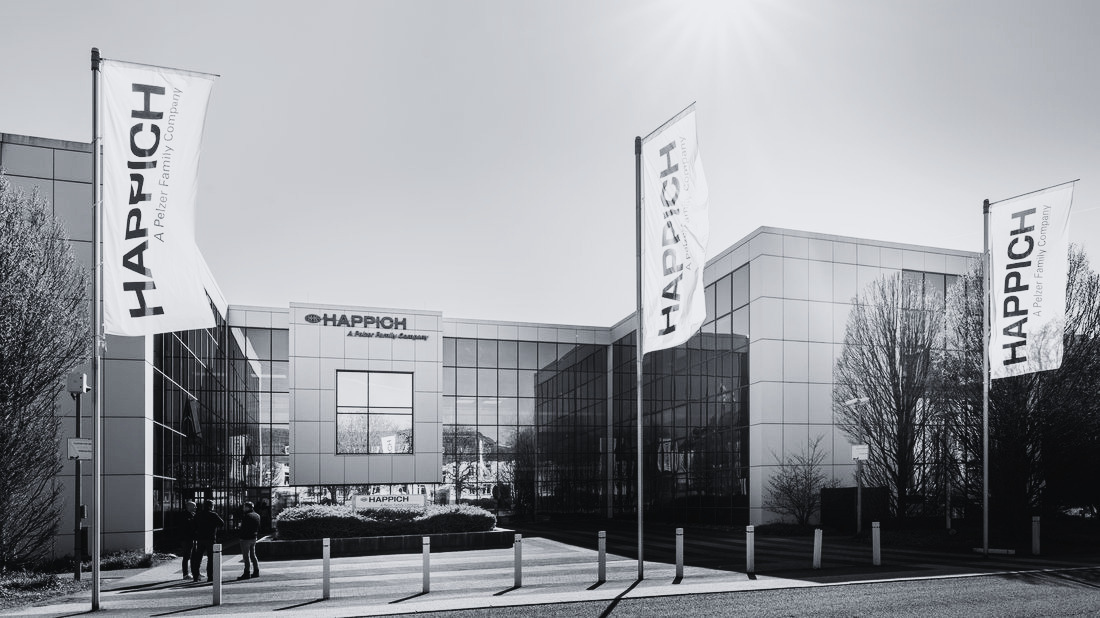
HAPPICH setzt bei SAP-Archivierung auf Wirtschaftlichkeit und Zukunftssicherheit
Teure Updates, hohe Lizenzkosten und veraltete Strukturen veranlassen HAPPICH, auf tia® zu wechseln
PUMA Future-Proofs Itself with a New Archiving Platform
The company-wide implementation of SAP S/4HANA prompted the sporting goods manufacturer to overhaul its archiving concept. In PUMA Austria and the countries managed from there alone, 33 million documents need to be migrated to the new system.
.png)

Kärcher: Archiving in the cloud and CMIS readiness from a single source
- Archiving as part of S/4HANA transformation
- AWS platform
- ArchiveLink and CMIS

Two men - 8 terabytes
Archiving solution at Hensoldt/Migration process of over 8 terabytes/kgs solutions at Hensoldt at a glance
.avif)

Coats switches to kgs archive and goes to the cloud
Motivation to change archive system / kg's solution for Coats / Migration process / Bye On-Premises - Hello Cloud



FAQ
FAQ about tia® — the intelligent archive
If you have any further questions about tia® that are not answered here, you can find more detailed information and helpful resources in our insights. We are also happy to advise you personally if you need an individual solution.
A content server is a system for centrally storing, managing and providing digital content such as documents, images, or videos. It is often used in companies to archive information in a structured and audit-proof manner.
A content server is used wherever large amounts of digital data must be securely managed and archived over the long term — for example, to store invoices, contracts or SAP data in accordance with the law.
While an ECM system (Enterprise Content Management) offers a variety of functions related to document management, workflows and collaboration, a content server usually focuses on the central archiving and structured provision of content — often in connection with third-party systems such as SAP.
Integration is carried out via standardized interfaces such as SAP ArchiveLink® or CMIS. These make it possible to automatically archive content from SAP systems in the content server and retrieve it directly from SAP as required.
Yes. tia® Content Server supports both on-premises, cloud and hybrid scenarios. They can be flexibly integrated into existing IT landscapes — even in combination with hyperscalers such as AWS, Azure or GCP.
CMIS stands for “Content Management Interoperability Services” — a vendor-independent standard for connecting and integrating various content management systems. A content server with CMIS support can thus communicate flexibly with different systems.
Yes. tia® content server from kgs — is certified by SAP. This certification guarantees technical compatibility and compliance with SAP guidelines when archiving content.
A content server offers high scalability, modern interfaces, low operational complexity and secure, legally compliant archiving. It can also be flexibly adapted to specific IT strategies — whether locally or in the cloud.
newsletters
Stay always abreast
In exchange with the archiving experts at kgs, it was discovered that there is a way to archive the new sales data in the kgs archive.


More posts

Enterprise Content Management (ECM)
Anyone involved in electronic administration and document digitization will frequently encounter the term Enterprise Content Management (ECM). Enterprise Content Management encompasses all technologies for capturing, managing, storing, preserving, and delivering documents and information, with the goal of holistically organizing business processes. The term is often used synonymously with Document Management System (DMS). However, for SAP-centric companies, an additional question arises: Is a comprehensive ECM system truly necessary for audit-proof archiving, or is a specialized, SAP-native archiving solution the more suitable alternative?

Organizational Debt: The invisible backlog of old rules, processes, and tools – and how to systematically reduce it before it eats away at productivity
The problem: Companies invest in new strategies, tools, and transformation programs while outdated structures, processes, and decision-making rules remain in place. This organizational debt creates delays, duplication of effort, and resistance to change. The core insight: Organizational debt is not the same as a single inefficient process. It is the accumulated stock of past compromises, omissions, and decisions that limits an organization's current execution power. What leaders should do: They should treat organizational debt like a strategic portfolio: make it visible, prioritize it by risk and interest, pay it down systematically, and prevent new debt from accumulating.

Why archiving is the critical success factor for S/4HANA migration
The clock is ticking: for ERP managers and DMS experts, the pressure to migrate to SAP S/4HANA is no longer a theoretical option, but a daily operational reality. Yet, when planning these transformation projects, one crucial factor is often criminally neglected: the volume of historical data and documents.
Anyone who, true to the mottoAll-in, attempts to lift database structures that have evolved over decades one-to-one into the new S/4HANA world puts the entire migration project at risk. Archiving is not an IT project to be deferred to quieter times—it is the foundation and the critical success factor for a seamless S/4HANA migration.
Company Memory Needs More Than AI: Why MCP and Intelligent Archiving Are Becoming Key Technologies in SAP's AI Strategy
The SAP Sapphire conferences in Orlando and Madrid clearly demonstrated the direction Enterprise AI is taking: away from the classic AI copilot and towards autonomous, context-aware AI agents.

SAP ILM Meets Cloud Storage: Why the 'File-Level Retention Lock' Blocks IT Infrastructure – and How to Do It Better
Organizations implementing SAP ILM (Information Lifecycle Management) to ensure GDPR compliance and data minimization often encounter a technological barrier when transitioning to modern cloud and object storage (S3/Blob): Rigid retention periods (Retention Locks) prevent agile system consolidation. The question for SAP Basis teams and archive experts is: How can the legally compliant destruction of data be operationalized without sacrificing the flexibility of the storage infrastructure? A deep dive into the world of CMIS, WebDAV, and application-controlled locks.

S/4HANA Migration: Why Data Detox is the Critical Path to Meeting the 2027 Deadline
S/4HANA Migration 2026: Why "Data Detox" is Your Critical Success Factor Against the 2027 Deadline Crash
Only just over 1.5 years remain until the final SAP ECC support ends. Anyone who now drags unstructured data baggage, such as historical FI/CO documents or delivery notes, unchecked into the new S/4HANA world will maneuver directly into a cost and time trap. Expensive in-memory storage (HANA RAM) and fully booked consultant capacities are unforgiving of bloated system architectures.
The answer for ERP managers and IT architects is: Pragmatic Data Detox before Go-Live. Learn how you can reduce your database footprint by up to 70% with the lean, software-driven archiving from kgs tia® via native ArchiveLink and CMIS interfaces. This way, you secure a high-performance S/4 system, sustainably minimize your TCO, and achieve a true, AI-ready Clean Core – exactly on schedule.
More Info
More Information & Resources


tia® from kgs

Solutions
